
Author: barretokevin

  • The Hidden Costs of Custodian Turnover — and How to Reduce Them

    The Hidden Costs of Custodian Turnover — and How to Reduce Them

    With turnover in the custodial industry reaching as high as 200%, many facilities find themselves cycling through staff multiple times a year. While this constant change is often treated as “normal,” it creates hidden expenses that quietly impact service quality, team morale, and day-to-day operations.

    Understanding where these costs come from—and how to limit them—can make a major difference when choosing a custodial partner. Here are the key areas to watch, along with practical ways to address them.

    Recruitment and Hiring Expenses

    Frequent turnover means ongoing job postings, interviews, and onboarding. The Society for Human Resource Management estimates that hiring a single new employee can cost around $4,700. These costs add up quickly when positions need to be filled over and over again.

    Strategy: Look for providers that invest in employee retention through fair pay, benefits, and career support. When teams stay longer, hiring costs naturally decrease.

    Training and Onboarding Impact

    Every new hire requires time to learn procedures, safety standards, and site-specific expectations. The Center for American Progress estimates that turnover can cost up to 21% of an employee’s annual salary, largely due to training time and reduced productivity during the ramp-up period.

    Strategy: Choose a provider with a structured, efficient training program that helps new staff become effective quickly while maintaining consistent service levels.

    Productivity Loss

    Experienced custodians work faster and more accurately than new team members. During transitions, productivity often dips. Gallup reports that organizations can see a 20–30% drop in output while employees adjust to new roles and responsibilities.

    Strategy: Partner with a company that emphasizes strong supervision and leadership. Active management helps stabilize teams, support new hires, and reduce performance gaps.

    Effect on Team Morale

    High turnover can place extra strain on remaining employees, leading to burnout and disengagement. Gallup has found that engaged employees are up to 21% more productive than disengaged ones, showing how closely morale and performance are connected.

    Strategy: Seek providers that promote a positive workplace culture, recognize employee contributions, and encourage growth. A supportive environment keeps teams motivated and more likely to stay.

    The Bottom Line

    When turnover reaches 200% a year, the true cost goes far beyond recruitment. Training time, lost productivity, and declining morale all add up to reduced service quality and higher long-term expenses.

    Working with a custodial partner that prioritizes retention, strong leadership, and efficient training can help control these hidden costs—while delivering more reliable, consistent, and high-quality service for your facility.


  • What’s the Right Choice for Janitorial Services?

    What’s the Right Choice for Janitorial Services?

    Staffing Agency vs. Professional Cleaning Company vs. In-House Teams

    Keeping a facility clean isn’t just about appearance—it’s about safety, efficiency, and the experience you create for employees and visitors. Most businesses choose between three options: working with a staffing agency, hiring a professional cleaning company, or managing cleaning internally. Each path offers different benefits and trade-offs, and the best fit depends on your goals, resources, and expectations.

    Staffing Agencies: What to Expect

    A staffing agency supplies workers who can perform cleaning tasks, but cleaning is usually not their primary specialization.

    Pros:

    • Flexible workforce: Easily scale staff up or down during busy seasons or short-term needs.
    • Quick placement: Positions can often be filled faster than traditional hiring.

    Considerations:

    • Limited training: Specialized janitorial training may be minimal or inconsistent.
    • Hands-on supervision required: Your team will likely need to manage daily performance.
    • Varying skill levels: Cleaning quality can differ from worker to worker without strong oversight.

    Professional Cleaning Companies: What to Expect

    A professional cleaning company focuses exclusively on facility maintenance and janitorial services, bringing systems and expertise to the table.

    Pros:

    • Trained specialists: Teams understand best practices, equipment use, and safety standards.
    • Reliable quality control: Regular inspections and performance checks help maintain consistency.
    • Expanded services: Many providers offer deep cleaning, floor care, carpet maintenance, and disinfection programs tailored to your space.

    Considerations:

    • Higher upfront cost: Professional services may cost more initially, but often reduce long-term issues and management time.

    In-House Cleaning: What to Expect

    Managing cleaning internally means hiring your own custodial staff or assigning existing employees to handle janitorial duties.

    Pros:

    • Full control: You decide schedules, products, and cleaning standards.
    • Customized approach: Processes can be tailored exactly to your facility’s preferences.
    • Potential short-term savings: Smaller spaces may reduce costs by handling cleaning internally.

    Considerations:

    • Time-intensive: Managing staff, training, and supplies can pull focus from core operations.
    • Upfront investment: Equipment, products, and training add to initial expenses.
    • Ongoing management: Performance tracking and consistency become your responsibility.

    How to Decide What’s Best for Your Facility

    • Choose a staffing agency if you need temporary or flexible labor for short-term or seasonal demands—and are prepared to manage quality closely.
    • Choose a professional cleaning company if you value consistency, expertise, and a full-service approach that can scale with your needs.
    • Choose in-house cleaning if you have the time, budget, and internal resources to manage staff, training, and equipment—especially in smaller facilities.

    Final Takeaway

    Each option has its strengths. Staffing agencies offer flexibility, professional cleaning companies deliver reliability and specialized expertise, and in-house teams provide full control. The right choice comes down to how much time you want to invest in management, the level of quality you expect, and the resources available to support your cleaning program.

  • Should Floor Care Be Included in Your Janitorial Contract—or Paid Per Job?

    Should Floor Care Be Included in Your Janitorial Contract—or Paid Per Job?

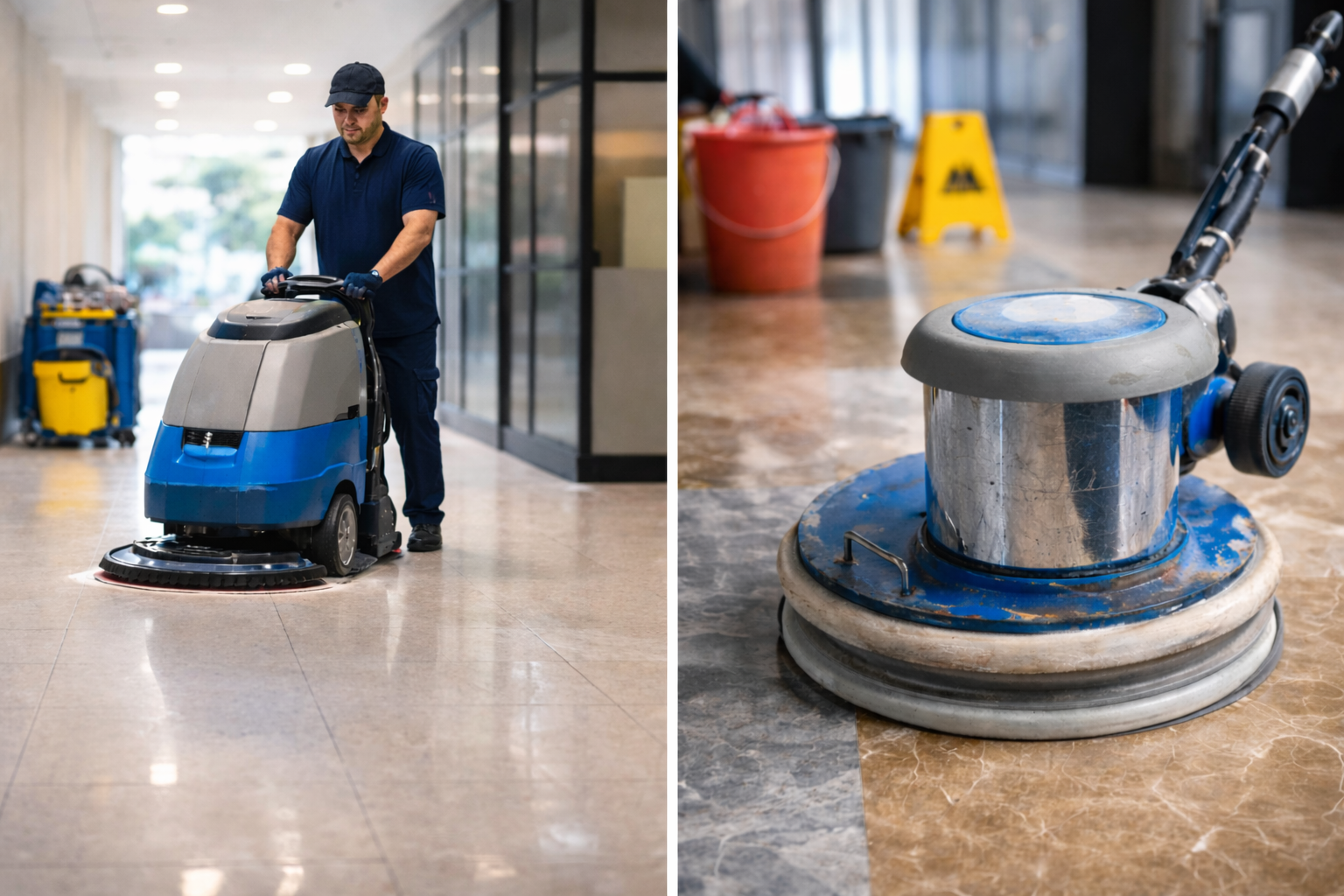
    Keeping commercial floors in great shape goes beyond daily sweeping and mopping. From deep scrubbing to stripping and waxing, proper floor care protects your facility’s appearance, safety, and long-term investment.

    One of the biggest decisions facility managers face is how to pay for these services: bundle floor care into a full janitorial contract or request and pay for it only when needed. Below is a breakdown of both options, along with their benefits and drawbacks, to help you decide what works best for your operation.

    Option 1: Including Floor Care in Your Janitorial Program

    With this approach, floor maintenance is built into your ongoing service agreement. Your cleaning provider handles routine upkeep and scheduled deep care as part of the regular program.

    Pros

    Predictable Budgeting
    Monthly costs stay consistent, making it easier to plan and avoid surprise expenses.

    Consistent Maintenance
    Regular attention helps protect finishes and coatings, extending the life of your flooring and preventing premature wear.

    Convenience
    All cleaning and floor care tasks are managed under one agreement, reducing scheduling and administrative work.

    Improved Appearance and Hygiene
    Ongoing care keeps floors looking polished and professional while supporting safety and cleanliness standards.

    Long-Term Value
    Preventive maintenance can reduce the need for costly repairs or replacements over time. Equipment is often kept on-site, minimizing extra service fees.

    Cons

    Paying for Services You May Not Always Need
    Facilities with light foot traffic may not require frequent deep floor care, which could lead to unnecessary costs.

    Less Flexibility
    Bundled programs can limit your ability to customize how often certain services are performed or which products and methods are used.

    Potential for Lower Priority
    When floor care is one part of a larger contract, it may not always receive the same level of attention as daily cleaning tasks.

    Option 2: Paying for Floor Care as Needed

    This model allows you to request floor services only when necessary and pay per job instead of on a recurring basis.

    Pros

    Greater Cost Control
    You only pay when services are required, which can work well for facilities with minimal or seasonal needs.

    Flexibility and Customization
    Choose exactly what type of service you want—deep scrubbing, waxing, or specialty treatments—when and where it’s needed.

    Targeted Maintenance
    Focus resources on high-traffic or problem areas without committing to a full-building program.

    Cons

    Unpredictable Expenses
    Emergency spills, stains, or unexpected wear can lead to higher or sudden costs.

    Inconsistent Upkeep
    Without a regular schedule, floors may deteriorate faster—especially in busy areas—leading to bigger repair or replacement expenses later.

    More Administrative Work
    Coordinating quotes, scheduling, and payments for each job can become time-consuming.

    Quality May Vary
    Infrequent service visits can sometimes lead to less thorough results compared to a long-term, accountable partnership.

    Final Thoughts

    There’s no one-size-fits-all answer. The right choice depends on your traffic levels, budget preferences, and how much consistency you need.

    • Choose a bundled program if you want predictable costs, convenience, and consistent long-term maintenance.
    • Choose pay-per-job services if your floor care needs are infrequent and you prefer flexibility and tighter control over spending.

    By evaluating how often your floors require professional care and how much management time you can dedicate, you can select the option that delivers the best overall value for your facility.