Category: Blog

Your blog category

  • Why Facility Leaders Can’t Ignore the Workplace Environment in 2026

    Why Facility Leaders Can’t Ignore the Workplace Environment in 2026

    Employee turnover isn’t driven by compensation alone. More often, it’s shaped by how people feel in their workplace every single day. Factors like cleanliness, safety, layout, and air quality quietly influence satisfaction, focus, and long-term loyalty. Below are key ways the physical environment impacts retention, supported by recent research.

    1. Employees walk away from spaces that feel unsafe or unhealthy

    • 61% say they would consider leaving a job if their workplace is consistently dirty or poorly maintained (Future Workplace, 2023).
    • Poor indoor air quality has been linked to up to a 15% drop in cognitive performance (Harvard T.H. Chan School of Public Health, 2021).

    2. Clean environments boost morale — and morale keeps people longer

    • 89% report that workplace cleanliness directly affects morale (Staples Workplace Survey, 2024).
    • 72% say a clean setting improves overall job satisfaction (ISS Cleaning Study, 2022).

    3. Common areas shape stay-or-go decisions

    • 74% feel more appreciated when breakrooms and shared spaces are well maintained (UBS Facilities Insights, 2023).
    • 60% say dirty common areas make them feel undervalued by leadership (Cintas Hygiene Survey, 2022).

    4. Clean facilities strengthen employer reputation and lower turnover

    • Well-kept workplaces are linked to 28% lower employee turnover (LinkedIn Workplace Report, 2023).
    • 52% of job candidates have turned down offers after seeing poor cleanliness during an on-site visit (CareerBuilder Workplace Study, 2022).

    5. Everyday frustration often comes from the environment

    • Employees in cluttered or messy spaces are twice as likely to experience daily stress (Psychology Today, 2021).
    • Poorly maintained environments can drive frustration levels up by as much as 40% (Journal of Environmental Psychology, 2020).

    6. Cleanliness directly affects absenteeism

    • Improved cleaning programs can reduce sick days by up to 46% (JOEM, 2019).
    • Workplace illness costs employers an estimated $225.8 billion each year (CDC, 2023).

    Why This Matters for Leaders

    A clean, organized, and healthy workplace helps employees feel supported, valued, and secure. That leads to stronger morale, fewer absences, and better long-term retention. In many cases, improving the environment is one of the simplest and most effective ways to keep top talent.

    Ready to reinforce your retention strategy?
    A healthier, more inviting workplace starts with a partner who understands how space impacts people. Connect with Element Cleaning Systems to schedule a personalized facility assessment.


  • What Visitors Notice in the First 10 Seconds (That Your Team Might Overlook)

    What Visitors Notice in the First 10 Seconds (That Your Team Might Overlook)

    When someone steps into your facility for the first time, their brain starts evaluating the space before they consciously think about it. Research in psychology shows that first impressions form extremely quickly—often in just a handful of seconds—and they influence how people interpret everything that follows.

    1. Entryways and Floors Create the First Impression

    The condition of your entrance and flooring is usually one of the first things people register. Clean, well-kept surfaces signal professionalism and care, while worn, stained, or dirty floors can quickly raise doubts about overall cleanliness.

    2. Scent Shapes Perception Faster Than Sight

    Smell plays a powerful role in how a space feels. Fresh, neutral air tends to create a sense of comfort and trust. On the other hand, musty, stale, or overly strong chemical odors can leave a negative impression—even if the rest of the facility looks spotless.

    3. Restrooms Act as a Silent Quality Test

    Even visitors who don’t use the restroom still notice its condition. Odors, visible trash, or lack of supplies can suggest that small details are being overlooked elsewhere in the building.

    4. High-Touch Surfaces Tell Their Own Story

    Fingerprints on glass, dust on fixtures, or grime on handrails may seem minor to staff who see them daily. To new visitors, these details can stand out and hint at a lack of attention to detail.

    5. Clean Spaces Build Confidence and Trust

    A well-maintained environment does more than look good—it makes people feel safe, welcomed, and respected. Cleanliness sends a clear message that care and professionalism are priorities.

    Why This Matters for Facility Leaders

    Most visitors don’t consciously analyze what they see—they react to how the space makes them feel. Once a negative impression forms, it often takes much more effort to change that perception.

    For facility teams, understanding these subtle cues can help set smarter cleaning priorities, focusing not only on health standards but also on how the space is experienced.

    Pro Tip: Walk through your facility as if you’re seeing it for the first time—or ask someone unfamiliar to do it for you. What stands out in those first few moments can guide your cleaning checks and quality standards.

  • Navigating New Labor Laws—and What They Mean for Your Cleaning Budget

    Navigating New Labor Laws—and What They Mean for Your Cleaning Budget

    On April 23, 2024, the U.S. Department of Labor (DOL) finalized a major update to the Fair Labor Standards Act (FLSA) that changes how exempt employees are classified and paid. With more than four million workers expected to be affected, these updates are especially important for organizations that manage or contract commercial cleaning services.

    Understanding what’s changing—and how it impacts costs—can help facility leaders and procurement teams plan ahead.

    The Current Framework

    To qualify as exempt from overtime under the FLSA’s executive, administrative, or professional categories, employees must meet three key standards:

    • Job Duties: Perform specific “white-collar” responsibilities, which often include supervisory or managerial roles such as field leaders or site managers in the cleaning industry.
    • Pay Structure: Be compensated on a salary or fee basis, rather than hourly wages.
    • Salary Threshold: Earn at least $684 per week (about $35,568 annually), a range commonly seen among field leadership roles in commercial janitorial operations.

    What the DOL’s Final Rule Changes

    After proposing updates in August 2023, the DOL confirmed a phased increase to the salary thresholds in April 2024. The changes roll out in two stages:

    • Starting July 1, 2024: The weekly minimum rises to $844 (approximately $43,888 per year). Many companies will need to adjust, though some already meet or exceed this level.
    • Starting January 1, 2025: The threshold increases again to $1,128 per week (about $58,656 annually).

    The rule also introduces automatic updates every three years beginning July 1, 2027, based on national earnings data, with flexibility to account for broader economic conditions.

    For commercial janitorial companies, these increases are expected to raise operating and payroll costs across the board.

    What Could Happen Next

    Although the July 1, 2024, date is set, legal challenges or changes in federal leadership could influence how the rule is implemented—similar to what has happened with past labor regulations.

    How Janitorial Companies Are Preparing

    Many professional cleaning providers are already taking steps to stay compliant and manage costs, including:

    • Reviewing which exempt employees may no longer qualify under the new salary levels.
    • Estimating the financial impact of reclassification or wage increases.
    • Deciding whether to adjust salaries, change job classifications, or restructure workloads.
    • Phasing in pay changes to align with both the July and January thresholds.
    • Exploring cost-control strategies to offset higher payroll expenses.
    • Updating timekeeping policies and training for employees who may move to hourly status.
    • Monitoring state labor laws that may impose stricter standards than federal rules.

    Final Thoughts

    The DOL’s updated rule represents a significant shift for employers and service providers alike. Proactive planning will be essential to maintain compliance, manage rising costs, and minimize operational disruption.

    As these changes take effect, many vendors may also approach clients about potential price adjustments to help cover a portion of the increased labor expenses—making early conversations and budget planning more important than ever.

  • The Hidden Costs of Custodian Turnover — and How to Reduce Them

    The Hidden Costs of Custodian Turnover — and How to Reduce Them

    With turnover in the custodial industry reaching as high as 200%, many facilities find themselves cycling through staff multiple times a year. While this constant change is often treated as “normal,” it creates hidden expenses that quietly impact service quality, team morale, and day-to-day operations.

    Understanding where these costs come from—and how to limit them—can make a major difference when choosing a custodial partner. Here are the key areas to watch, along with practical ways to address them.

    Recruitment and Hiring Expenses

    Frequent turnover means ongoing job postings, interviews, and onboarding. The Society for Human Resource Management estimates that hiring a single new employee can cost around $4,700. These costs add up quickly when positions need to be filled over and over again.

    Strategy: Look for providers that invest in employee retention through fair pay, benefits, and career support. When teams stay longer, hiring costs naturally decrease.

    Training and Onboarding Impact

    Every new hire requires time to learn procedures, safety standards, and site-specific expectations. The Center for American Progress estimates that turnover can cost up to 21% of an employee’s annual salary, largely due to training time and reduced productivity during the ramp-up period.

    Strategy: Choose a provider with a structured, efficient training program that helps new staff become effective quickly while maintaining consistent service levels.

    Productivity Loss

    Experienced custodians work faster and more accurately than new team members. During transitions, productivity often dips. Gallup reports that organizations can see a 20–30% drop in output while employees adjust to new roles and responsibilities.

    Strategy: Partner with a company that emphasizes strong supervision and leadership. Active management helps stabilize teams, support new hires, and reduce performance gaps.

    Effect on Team Morale

    High turnover can place extra strain on remaining employees, leading to burnout and disengagement. Gallup has found that engaged employees are up to 21% more productive than disengaged ones, showing how closely morale and performance are connected.

    Strategy: Seek providers that promote a positive workplace culture, recognize employee contributions, and encourage growth. A supportive environment keeps teams motivated and more likely to stay.

    The Bottom Line

    When turnover reaches 200% a year, the true cost goes far beyond recruitment. Training time, lost productivity, and declining morale all add up to reduced service quality and higher long-term expenses.

    Working with a custodial partner that prioritizes retention, strong leadership, and efficient training can help control these hidden costs—while delivering more reliable, consistent, and high-quality service for your facility.

  • What’s the Right Choice for Janitorial Services?

    What’s the Right Choice for Janitorial Services?

    Staffing Agency vs. Professional Cleaning Company vs. In-House Teams

    Keeping a facility clean isn’t just about appearance—it’s about safety, efficiency, and the experience you create for employees and visitors. Most businesses choose between three options: working with a staffing agency, hiring a professional cleaning company, or managing cleaning internally. Each path offers different benefits and trade-offs, and the best fit depends on your goals, resources, and expectations.

    Staffing Agencies: What to Expect

    A staffing agency supplies workers who can perform cleaning tasks, but cleaning is usually not their primary specialization.

    Pros:

    • Flexible workforce: Easily scale staff up or down during busy seasons or short-term needs.
    • Quick placement: Positions can often be filled faster than traditional hiring.

    Considerations:

    • Limited training: Specialized janitorial training may be minimal or inconsistent.
    • Hands-on supervision required: Your team will likely need to manage daily performance.
    • Varying skill levels: Cleaning quality can differ from worker to worker without strong oversight.

    Professional Cleaning Companies: What to Expect

    A professional cleaning company focuses exclusively on facility maintenance and janitorial services, bringing systems and expertise to the table.

    Pros:

    • Trained specialists: Teams understand best practices, equipment use, and safety standards.
    • Reliable quality control: Regular inspections and performance checks help maintain consistency.
    • Expanded services: Many providers offer deep cleaning, floor care, carpet maintenance, and disinfection programs tailored to your space.

    Considerations:

    • Higher upfront cost: Professional services may cost more initially, but often reduce long-term issues and management time.

    In-House Cleaning: What to Expect

    Managing cleaning internally means hiring your own custodial staff or assigning existing employees to handle janitorial duties.

    Pros:

    • Full control: You decide schedules, products, and cleaning standards.
    • Customized approach: Processes can be tailored exactly to your facility’s preferences.
    • Potential short-term savings: Smaller spaces may reduce costs by handling cleaning internally.

    Considerations:

    • Time-intensive: Managing staff, training, and supplies can pull focus from core operations.
    • Upfront investment: Equipment, products, and training add to initial expenses.
    • Ongoing management: Performance tracking and consistency become your responsibility.

    How to Decide What’s Best for Your Facility

    • Choose a staffing agency if you need temporary or flexible labor for short-term or seasonal demands—and are prepared to manage quality closely.
    • Choose a professional cleaning company if you value consistency, expertise, and a full-service approach that can scale with your needs.
    • Choose in-house cleaning if you have the time, budget, and internal resources to manage staff, training, and equipment—especially in smaller facilities.

    Final Takeaway

    Each option has its strengths. Staffing agencies offer flexibility, professional cleaning companies deliver reliability and specialized expertise, and in-house teams provide full control. The right choice comes down to how much time you want to invest in management, the level of quality you expect, and the resources available to support your cleaning program.

  • Should Floor Care Be Included in Your Janitorial Contract—or Paid Per Job?

    Should Floor Care Be Included in Your Janitorial Contract—or Paid Per Job?

    Keeping commercial floors in great shape goes beyond daily sweeping and mopping. From deep scrubbing to stripping and waxing, proper floor care protects your facility’s appearance, safety, and long-term investment.

    One of the biggest decisions facility managers face is how to pay for these services: bundle floor care into a full janitorial contract or request and pay for it only when needed. Below is a breakdown of both options, along with their benefits and drawbacks, to help you decide what works best for your operation.

    Option 1: Including Floor Care in Your Janitorial Program

    With this approach, floor maintenance is built into your ongoing service agreement. Your cleaning provider handles routine upkeep and scheduled deep care as part of the regular program.

    Pros

    Predictable Budgeting
    Monthly costs stay consistent, making it easier to plan and avoid surprise expenses.

    Consistent Maintenance
    Regular attention helps protect finishes and coatings, extending the life of your flooring and preventing premature wear.

    Convenience
    All cleaning and floor care tasks are managed under one agreement, reducing scheduling and administrative work.

    Improved Appearance and Hygiene
    Ongoing care keeps floors looking polished and professional while supporting safety and cleanliness standards.

    Long-Term Value
    Preventive maintenance can reduce the need for costly repairs or replacements over time. Equipment is often kept on-site, minimizing extra service fees.

    Cons

    Paying for Services You May Not Always Need
    Facilities with light foot traffic may not require frequent deep floor care, which could lead to unnecessary costs.

    Less Flexibility
    Bundled programs can limit your ability to customize how often certain services are performed or which products and methods are used.

    Potential for Lower Priority
    When floor care is one part of a larger contract, it may not always receive the same level of attention as daily cleaning tasks.

    Option 2: Paying for Floor Care as Needed

    This model allows you to request floor services only when necessary and pay per job instead of on a recurring basis.

    Pros

    Greater Cost Control
    You only pay when services are required, which can work well for facilities with minimal or seasonal needs.

    Flexibility and Customization
    Choose exactly what type of service you want—deep scrubbing, waxing, or specialty treatments—when and where it’s needed.

    Targeted Maintenance
    Focus resources on high-traffic or problem areas without committing to a full-building program.

    Cons

    Unpredictable Expenses
    Emergency spills, stains, or unexpected wear can lead to higher or sudden costs.

    Inconsistent Upkeep
    Without a regular schedule, floors may deteriorate faster—especially in busy areas—leading to bigger repair or replacement expenses later.

    More Administrative Work
    Coordinating quotes, scheduling, and payments for each job can become time-consuming.

    Quality May Vary
    Infrequent service visits can sometimes lead to less thorough results compared to a long-term, accountable partnership.

    Final Thoughts

    There’s no one-size-fits-all answer. The right choice depends on your traffic levels, budget preferences, and how much consistency you need.

    • Choose a bundled program if you want predictable costs, convenience, and consistent long-term maintenance.
    • Choose pay-per-job services if your floor care needs are infrequent and you prefer flexibility and tighter control over spending.

    By evaluating how often your floors require professional care and how much management time you can dedicate, you can select the option that delivers the best overall value for your facility.

  • Why Scrubbing Hard Surface Floors Should Be a Core Part of Your Cleaning Plan

    Why Scrubbing Hard Surface Floors Should Be a Core Part of Your Cleaning Plan

    Mopping handles what you can see, but it often leaves behind residue and embedded grime that slowly dulls your floors. Scrubbing goes deeper—lifting stubborn soil, grease, and buildup to protect both appearance and performance. Here’s why this step deserves a regular spot in your maintenance program.

    1. Removes Ground-In Dirt and Residue

    Traditional mopping clears surface debris, but over time it can leave chemical film behind. Scrubbing reaches into textured surfaces and seams to remove trapped dirt, oils, and residues that can harbor bacteria and odors.

    2. Extends the Life of Your Floors

    Fine grit and debris act like sandpaper under foot traffic, creating micro-scratches that wear down coatings. Routine scrubbing helps preserve finishes and reduces the need for early stripping, refinishing, or replacement.

    3. Improves Overall Appearance

    Freshly scrubbed floors look brighter, cleaner, and more professional. This is especially important in high-traffic or customer-facing areas where visual impressions matter most.

    4. Enhances Safety

    Built-up grime and leftover chemicals can create slick spots. Regular scrubbing restores traction, helping reduce the risk of slips and falls for employees and visitors alike.

    5. Strengthens Hygiene Standards

    In environments like healthcare, food service, and childcare, deeper cleaning is essential. Scrubbing helps remove bacteria, allergens, and biofilm that routine cleaning may miss.

    6. Protects Your Investment

    Hard surface flooring—such as VCT, tile, and LVT—represents a significant investment. A proactive maintenance plan that includes scheduled scrubbing helps maintain warranties and minimizes costly long-term repairs.

    How Often Should Floors Be Scrubbed?

    • High-traffic areas: Weekly to monthly
    • Moderate-use spaces: Monthly to quarterly
    • Low-traffic or specialty floors: As needed or according to manufacturer guidelines

    Tools Commonly Used

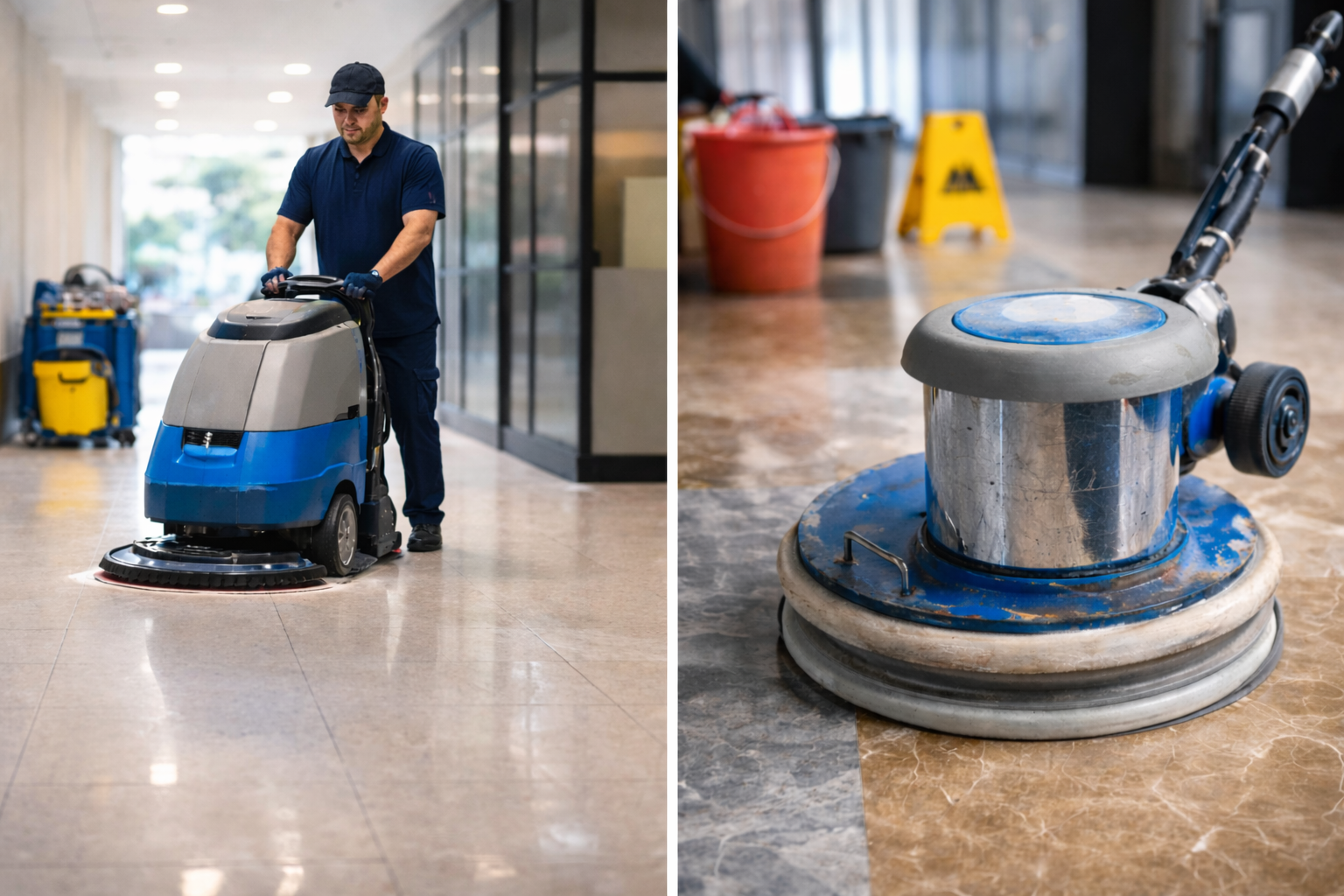
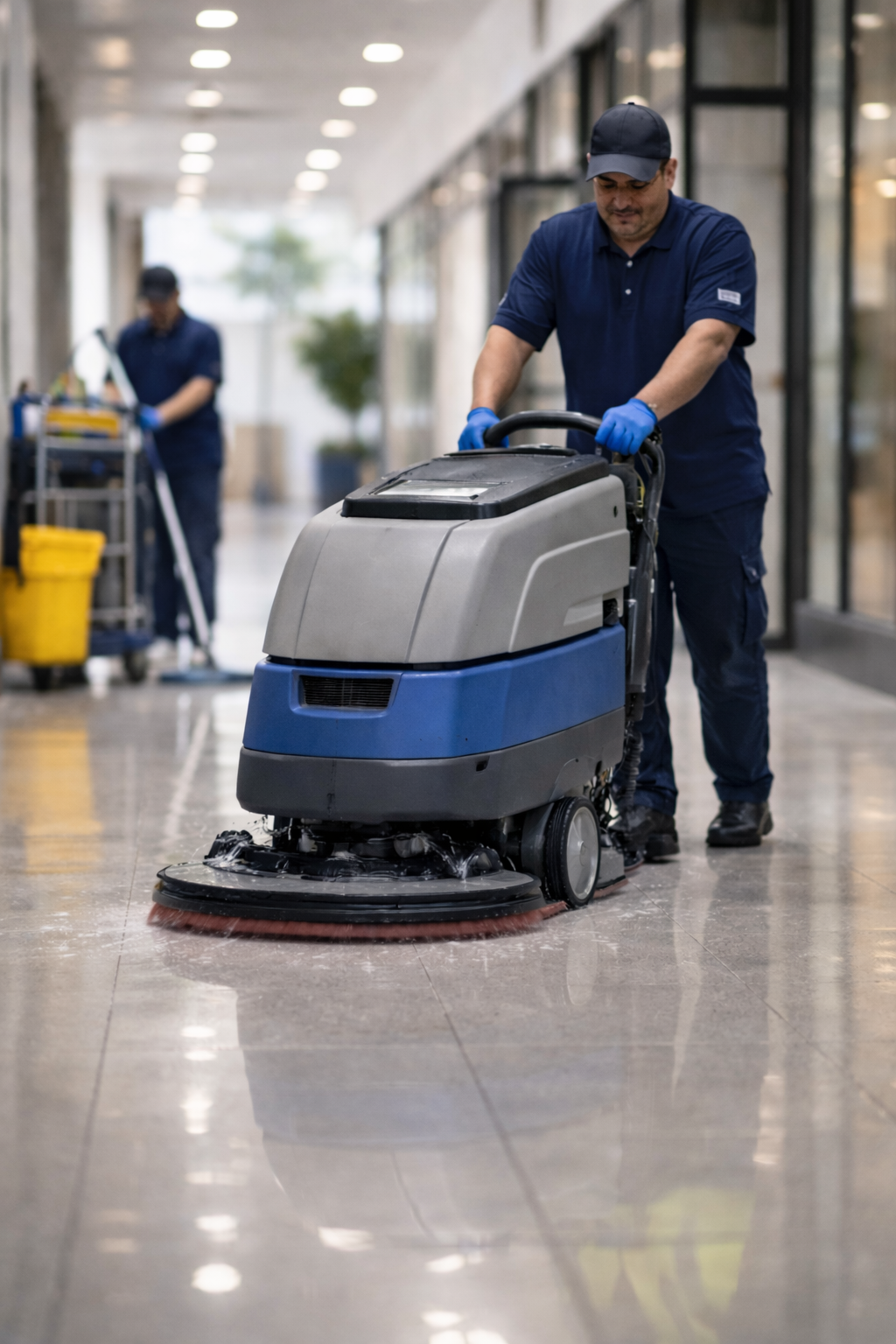
    • Walk-behind or ride-on automatic scrubbers
    • Rotary floor machines
    • Floor-specific pads and specialty brushes

    The Bottom Line

    Scrubbing is more than a cosmetic step—it’s preventive care for your facility. When built into your routine cleaning program, it improves safety, supports hygiene, and helps control long-term maintenance costs.

  • Six Signs Your Janitorial Partner May Be Cutting Corners

    Six Signs Your Janitorial Partner May Be Cutting Corners

    Not every cleaning provider delivers the same level of care. When a janitorial team starts taking shortcuts, the warning signs often show up quietly—until they begin to affect morale, safety, and how your business is perceived. A truly clean, well-run facility supports employees, protects visitors, and strengthens your brand.

    Below are six common signals your provider may not be delivering the quality you were promised, along with steps to help you course-correct.

    1. Supervisors Are Nowhere to Be Seen

    If you only hear from your provider when something goes wrong, that’s a concern. Strong janitorial partners conduct routine site checks, communicate regularly, and keep you informed. Little to no visibility often points to little accountability.

    2. It’s Unclear What Work Is Actually Being Completed

    Most agreements begin with a clear Scope of Work. But without inspection reports, checklists, or performance updates, it becomes difficult to confirm that tasks are still being handled as expected. When tracking disappears, confidence usually follows.

    3. The Space No Longer Feels Clean

    You don’t need professional training to notice when standards slip. Odors, dusty surfaces, streaked glass, or an overall “run-down” feel can indicate rushed jobs or skipped tasks. If the building doesn’t feel clean, there’s probably a reason.

    4. Small Complaints Keep Popping Up

    Comments like “the floors feel sticky” or “the break room looks messy” may seem minor, but they often signal bigger issues behind the scenes. High-quality providers address these details before they become repeated concerns.

    5. Restrooms Are Inconsistent

    Bathrooms are one of the clearest indicators of cleaning quality. If they look great one day and neglected the next, it may mean the team is prioritizing speed over consistency instead of following a reliable schedule.

    6. Supplies Are Frequently Missing

    Running out of soap, paper towels, or seeing trash bins overflow shouldn’t be normal. These issues usually point to poor planning, skipped checks, or weak inventory management.

    What to Do If You Notice These Signs

    • Schedule a walk-through. Review the space together and talk through your concerns.
    • Revisit your Scope of Work. Make sure it still reflects your needs and ask how quality is being measured.
    • Request documentation. Reports and checklists help ensure transparency and accountability.
    • Consider other options. If improvement doesn’t happen, it may be time to look for a provider that takes pride in their work.

    Why Element Cleaning Systems Stands Apart

    At ECS, we go beyond cleaning—we focus on consistency, communication, and proof of performance. Our four-step service model is designed to ensure every task is completed thoroughly and visibly. Your facility deserves a partner who treats your standards as their own.